
Sarah’s hands shook as she packed for rehab. She had fought alcohol for years and was ready to start her recovery. She felt scared and hopeful at the same time, knowing this was her chance to take back her life.
Alcohol use disorder affects millions in the U.S., changing their lives in many ways. Deciding to seek help is brave, but it’s often filled with uncertainty. Knowing what to expect in alcohol rehab can help ease these worries and pave the way for success.
Alcohol treatment programs offer a safe space for healing and learning. They help people develop the skills needed for a sober life. From detox to therapy and aftercare, each step is designed to support lasting recovery. Remember, every person’s journey is different, but the goal is the same: a healthier, alcohol-free life.
Key Takeaways
- About 28.9 million Americans aged 12 and older struggle with alcohol use disorder.
- Alcohol rehab typically involves detox, therapy, and aftercare stages.
- Medical supervision is key during the detox process.
- Treatment includes individual counseling, group therapy, and family sessions.
- Rehab programs teach relapse prevention and life skills.
- Aftercare support is vital for staying sober after treatment.
- Recovery can face challenges like cravings, mental health issues, and adjusting to social life.
Understanding Alcohol Use Disorder and Its Impact
Alcohol use disorder affects millions worldwide, deeply impacting lives. It’s more than just occasional drinking. It disrupts daily life and relationships.
Recognizing the Signs of Alcohol Addiction
Spotting addiction signs early is key. Look out for:
- Increased alcohol consumption
- Higher tolerance levels
- Difficulty controlling intake
- Neglecting enjoyable activities
- Hiding drinking habits
Physical and Mental Health Effects
Alcohol use disorder harms both body and mind. It can cause liver damage and depression. Long-term use can lead to serious health issues and lower quality of life.
| Physical Effects | Mental Effects |
|---|---|
| Liver disease | Depression |
| Heart problems | Anxiety |
| Weakened immune system | Memory issues |
The Decision to Seek Treatment
Deciding to seek treatment is a big step towards recovery. Professional help can manage withdrawal and teach coping strategies. Our approach focuses on physical, emotional, and spiritual healing.
“Seeking help is a sign of strength, not weakness. It’s the first step towards reclaiming your life from alcohol use disorder.”
Preparing for Your Rehabilitation Journey
Getting ready for rehab is a big step towards healing. With over 16,000 addiction treatment centers in the U.S., knowing what to expect helps. This guide will show you how to pack, gather documents, and make key arrangements.
Essential Items to Pack
When packing for rehab, think carefully. Bring clothes that are comfy, toiletries, and any meds you need. Also, pack books or journals to help you on your journey. But, remember, some places have rules about electronics and outside food.
- Comfortable clothing for various activities
- Toiletries and personal care items
- Prescription medications in original containers
- Inspirational books or journals
- Family photos for comfort
Documentation Requirements
Having the right documents is key for a smooth start. Collect your ID, insurance card, and any medical records. These will help your care team give you the best treatment.
Making Arrangements for Work and Family
Before you go to rehab, sort out work and family stuff. The Family and Medical Leave Act (FMLA) lets you take up to 26 weeks off for addiction. Set up automatic payments for bills to keep your finances stable. If you have kids or pets, find someone to take care of them while you’re away.
Rehab prep is all about setting yourself up for success. By packing smart, getting your documents in order, and arranging for work and family, you’re on the right path to recovery.
The Initial Assessment and Admission Process
The rehab intake process is the beginning of your recovery journey. It’s a key step that includes a detailed alcohol addiction assessment. This helps create a treatment plan just for you.
When you get to the rehab facility, you’ll meet the admissions team. They’ll ask you about your substance use history, medical background, and mental health. This usually takes about an hour.
- Your substance use patterns
- Physical and mental health concerns
- Family history of addiction
- Social support system
- Triggers for substance use
- Current living situation
You might also have a physical exam, including blood tests and vital sign checks. It’s important to be honest. This helps the team make the best treatment plan for you.
“The initial assessment is our roadmap to your recovery. It’s not just about gathering information; it’s about understanding you as a whole person.”
Here’s how you can prepare for your assessment:
| Do | Don’t |
|---|---|
| Get a good night’s sleep | Skip meals before the assessment |
| Arrive early | Bring prohibited items |
| Dress comfortably | Hide information about your substance use |
| Bring necessary paperwork | Forget to ask questions |
Remember, this assessment is the first step towards your new life. It’s normal to feel nervous, but you’re in caring, professional hands.
The Journey to Sobriety: What to Expect in Alcohol Rehab
Starting alcohol rehab is a big step. Knowing about the schedule, rules, and how long it lasts can make you feel better. It helps you know what to expect.
Daily Schedule and Structure
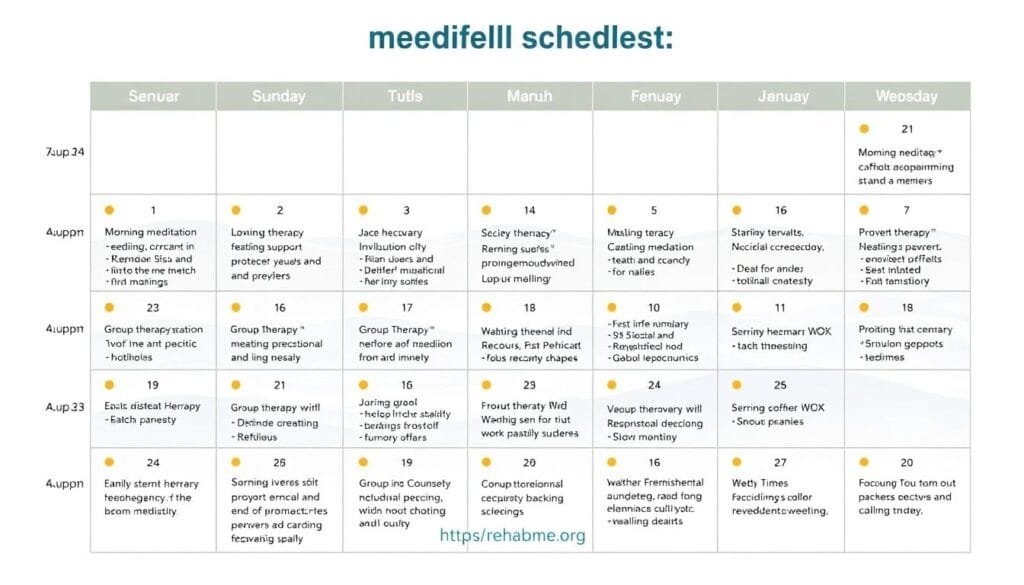
The daily plan in rehab is made to help you heal and grow. You’ll have therapy, classes, and fun activities. This routine helps you learn new habits and ways to deal with problems.
Rules and Guidelines
Rehab has rules to keep everyone safe and supportive. These rules might limit phone use, who can visit, and group activity rules. Even though they seem strict, they help you stay focused on getting better.
Duration of Treatment
How long you stay in rehab depends on your needs. Some programs last 30 days, while others can go up to 90 days or more. Longer stays often mean better results. The first month is key as you learn to live without alcohol and manage cravings.
- 30 days: Initial physical improvements, better sleep, increased energy
- 60 days: Development of coping strategies, reduction in cravings
- 90+ days: Reinforcement of new habits, preparation for life after rehab
Remember, recovery is a personal journey. The support from professionals, peers, and loved ones is very important. It can greatly improve your chances of staying sober for a long time.
Medical Detoxification: The First Step to Recovery
Medical detox is the start of your path to sobriety. It safely removes alcohol from your body with medical care. The process has three stages: evaluation, stabilization, and getting ready for more treatment.
Managing Withdrawal Symptoms
Alcohol detox brings withdrawal symptoms. These can start 6-24 hours after your last drink. Symptoms include insomnia, tremors, anxiety, and headaches.
In severe cases, seizures can happen in the first 48 hours. The severity of symptoms depends on your drinking habits, health, age, and nutrition.
Medical Supervision and Support
Managing withdrawal is key in alcohol detox. Doctors watch over you and give medicines to help with pain and prevent problems. They often use benzodiazepines like Diazepam and Lorazepam.
This care keeps you safe during detox.
Duration of Detox Process
The detox time varies for everyone. Early symptoms may go away in a few days. But, some effects, like delirium tremens, can peak around day five.
On average, detox lasts 3 to 7 days. Remember, detox is just the first step. It leads to more treatment and long-term sobriety.
Therapeutic Approaches in Rehabilitation

Rehabilitation for alcohol addiction has many methods, each tailored for different needs. In the U.S., 29.5 million people face alcohol use disorder. Effective treatment is key. Rehab centers use proven methods to tackle addiction’s physical and mental sides.
Cognitive Behavioral Therapy (CBT) is a key part of many programs. It helps people change negative thoughts that lead to drinking. Patients learn how to handle triggers and avoid relapse.
Dialectical Behavior Therapy (DBT) is also popular. It teaches emotional control and mindfulness. This way, patients deal with stress without alcohol. DBT works well for those with mental health issues too.
Motivational Interviewing (MI) is another approach. It makes patients find their own reasons to change. This way, they become more involved in their recovery.
- Group therapy sessions foster peer support and shared experiences
- Family therapy helps repair relationships damaged by addiction
- Holistic approaches like yoga and meditation complement traditional therapies
These methods are often used together in a treatment plan. The right mix helps people gain the skills for lasting sobriety. Remember, with the right support and commitment, recovery is possible.
Individual and Group Counseling Sessions
Rehab programs offer different therapy options to help you recover. You can choose from individual therapy, group counseling, and family therapy. Each one is important for beating addiction and living a healthier life.
One-on-One Therapy Benefits
Individual therapy gives you a private space to work on personal issues. You’ll talk to a therapist about your specific concerns. This helps you understand and deal with your addiction’s roots.
Group Support Dynamics
Group counseling brings people together who face similar challenges. You’ll hear others’ stories and gain new insights. These sessions help you feel less alone and build a support network.
Family Therapy Integration
Family therapy includes your loved ones in your recovery. It aims to fix communication and heal relationships damaged by addiction. This makes your support system stronger for the long run.
| Therapy Type | Focus | Benefits |
|---|---|---|
| Individual Therapy | Personal issues | Tailored support, confidentiality |
| Group Counseling | Peer support | Shared experiences, reduced isolation |
| Family Therapy | Relationship healing | Improved communication, stronger support |
Studies show that mixing these therapies boosts your chance of staying sober. After a year, 20% of patients stay alcohol-free. But, after two years, that number jumps to 60%. This shows the value of ongoing support.
Holistic Healing and Alternative Therapies
Holistic rehab treats the whole person, not just the addiction. It looks at emotional, physical, and spiritual health. This way, it helps people recover fully.
Alternative therapies are key in holistic treatment. They work alongside traditional medicine. These include:
- Nutritional therapy
- Exercise and recreational activities
- Mindfulness meditation
- Massage
- Acupuncture
Treatment centers use these therapies to help people cope better. They aim to fix the reasons behind addiction, like trauma or mental health issues. This helps improve overall well-being.
Holistic care seeks balance in life. It uses many treatments, like cognitive behavioral therapy and yoga. By mixing these with alternative therapies, it offers a full recovery plan.
“Holistic therapy aims to treat the whole person by addressing emotional, physical, and spiritual aspects to ensure complete healing during the recovery journey.”
Every person gets a treatment plan that fits them. These plans might include therapy for past traumas or mental health. Group activities and support groups also help, providing connection and support.
Building Life Skills and Coping Strategies
Recovery from alcohol addiction is more than just not drinking. It’s about starting a new, healthy life. This means learning important life skills and coping strategies to stay sober and do well every day.
Stress Management Techniques
Stress can lead to relapse. It’s vital to learn how to handle stress well. Good ways to reduce stress include regular exercise, meditation, and spending time outdoors. At Renewal Lodge, the Mindfulness in Recovery® program teaches patients to use mindfulness as a powerful tool in their recovery journey.
Relapse Prevention Planning
Relapse is a big worry in recovery. Having a good plan to prevent relapse is key to staying sober for a long time. This plan should know when you might be at risk and have ways to deal with it. It’s also important to have a strong support network, like recovery groups, family, and professionals.
Healthy Lifestyle Practices
Living a healthy lifestyle is key to recovery. This means regular exercise, eating well, and getting enough sleep. These habits help your body stay healthy and give you more energy and better mood.
| Healthy Lifestyle Practice | Benefits |
|---|---|
| Regular Exercise | Improves mood, reduces stress, boosts energy |
| Nutritious Eating | Supports organ function, enhances overall health |
| Good Sleep Hygiene | Improves sleep quality, increases daily energy |
| Mindfulness Practice | Reduces stress, enhances self-awareness |
By working on these areas, people in recovery can get the skills to stay sober and live a fulfilling life. Remember, recovery is a journey. Every step towards a healthier lifestyle is a step towards lasting sobriety.
Aftercare Planning and Support Systems
Leaving rehab is just the beginning of your recovery journey. Addiction aftercare is essential to stay sober. A good plan helps you tackle challenges and avoid relapse. Let’s look at the important parts of aftercare and support systems.
Outpatient programs are key after inpatient treatment. They offer care from 9 hours a week to 6-8 hours daily. These sessions help you improve skills learned in rehab.
Support groups are vital for long-term sobriety. Studies show that being active in 12-Step meetings improves outcomes. Going to recovery meetings helps you build a sober network. Groups like Alcoholics Anonymous and SMART Recovery are popular.
| Aftercare Component | Benefit |
|---|---|
| Outpatient Programs | Continued therapy and skill-building |
| Support Groups | Peer connection and accountability |
| Sober Living Homes | Drug-free environment and structure |
| Therapy Sessions | Ongoing professional support |
Sober living homes provide a drug-free space for transitioning back to life. They focus on strength and have shown to increase sobriety rates. Regular therapy, starting weekly and decreasing, offers professional help.
Your aftercare plan should cover triggers, coping strategies, and emergency contacts. It’s tailored to your needs and can evolve. With a solid aftercare plan and support, you’re set for lasting recovery.
Conclusion
Starting a sobriety journey through alcohol rehab is a big step. It involves many stages, from the first check-up to planning for aftercare. Each step is important for building a strong base for lasting sobriety.
Rehab success rates can vary. Studies show that 68.1% of people stay sober for 3 months, but only 36.2% do so for 12 months after detox. These numbers show that recovery is a long-term process. Many people get help from 12-step programs, while others try “California sober” or focus on emotional sobriety.
Keeping sober is a continuous effort that goes beyond rehab. It means learning new ways to handle stress, building a support network, and changing your lifestyle. Regular exercise, healthy eating, and joining support groups help lead a substance-free life. Every step towards sobriety is a reason to celebrate.